Ahmedabad ⟶ 23.0°N, 72.5°E
Mihir
Bathani.
Technical Artist specializing in real-time environments, Blueprint systems, cinematic lighting & technical workflows in Unreal Engine.
Scroll
Technical Artist specializing in real-time environments, Blueprint systems, cinematic lighting & technical workflows in Unreal Engine.
I'm Mihir — an Unreal Engine technical artist working at the edge of real-time graphics, broadcast and games. My days are split between building cinematic environments, wiring Blueprint systems and data-driven visuals, and optimizing assets that have to ship live at 60fps.
I go from white-boxed level to fully lit, textured environment — then plug it into broadcast pipelines with AR overlays and custom operator interfaces. I care about the small things: silhouettes, material response, the weight of a camera move, and a frame budget that holds under pressure.
References, mood & intent. Defining the shot and the constraints.
Greybox scale, camera language & composition before any detail.
Modular, game-ready geometry built for reuse and silhouette.
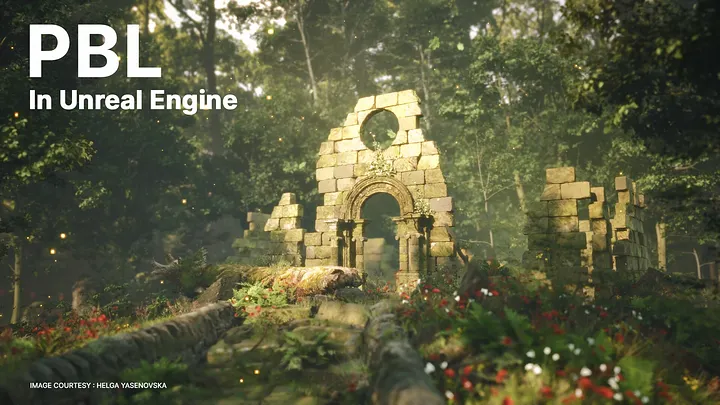
PBR + master materials, trims & instances for art-direction speed.
Lumen / cinematic lighting — mood, exposure & volumetrics.
Nanite, LODs, draw calls & profiling to hold the frame budget.
Sequencer renders, look-dev passes & delivery for the medium.
Procedural content generation for scalable, art-directable environments in UE5.
Procedural modeling & tooling — bringing node-based workflows into the pipeline.
In-camera VFX, LED-volume workflows & real-time cinematography.
Python automation & data bridges to speed up live-graphics production.
Exploring real-time 2D broadcast graphics, overlays, and motion design for live productions.
Parul University, Vadodara
Arena Animation, Ahmedabad
Arena Animation, Ahmedabad
Smt. R.M. Tilva HS, Jamnagar
Modular sets, landscapes and set-dressing — lit and dressed for cinematic or real-time use. Lumen & Nanite-aware.
Gameplay & systems logic, UMG interfaces and editor tooling that speed up production.
Data-driven visuals for live sport — overlays, operator interfaces and real-time playout.
Nanite, Lumen, LODs, draw-call & memory profiling to hold a stable frame budget.
Mood, exposure and volumetrics — from study to final cinematic grade.
Python automation, JSON/Socket.IO data bridges and DCC-to-engine workflows.
Prefer email? work.mihirbathani@gmail.com
Unreal Engine 5 Cinematic
A stunning wind farm! Modeled in Maya, textured in Substance 3D Painter, and rigged in Maya, this scene is rendered beautifully in Unreal Engine. This project was a personal goal in which I wanted to create a realistic 3D version of Hamish's original concept in Unreal, whilst still keeping its core aesthetic values and color scheme. Foliage assets are sourced from the marketplace and Quixel Bridge, bringing the environment to life. Based on Hamish Frater's original 2D Wind Farm concept.
Unreal Engine Artist
Unreal Engine 5 Cinematic
🎮 The Sound of 'WAR' – Weekend Project 🚀 Created using Fab assets and Ultra-Dynamic Sky lighting. Color graded in After Effects and rendered in real-time on an NVIDIA GeForce RTX 3060 Laptop.
Unreal Engine Artist
Unreal Engine 5 Cinematic
This Short Scene Entitled ‘The Lost House’ Was Created by Me. The Entire Environment Was Built In Unreal Engine 5.3 ,Using Quixel Assets and Some Marketplace Assets and entire forest made up by Unreal’s Procedural Content Generation (PCG) Tool.
UE 5.3 Cinematic
Inspired by the mesmerizing work of Magnet VFX, this digital realm breathes life into an abandoned village, where echoes of memories linger along the tranquil riverside. 🏡
Unreal Engine Artist
R&D · Rendered 3D · 2026
Tried something new on weekend! After recently trying the epigamia Chocolate Protein Shake, I wanted to recreate it in 3D. So, I took on a short project to visualize it in a cinematic style using Blender & Photoshop. Modeled and UV-unwrapped in Blender, with texturing and try new package design in Photoshop - experimented with chocolate splashes, floating objects, and a dramatic desert landscape to enhance the visual narrative.
R&D · Rendered 3D · 2026
An experiment in building a photo-realistic Earth entirely in Blender, using Claude (via Blender MCP tools) as a technical partner to write and execute Python scripts. The goal wasn't a one-click render — it was to test how far AI-assisted iteration could accelerate a fully art-directed pipeline while keeping every creative decision my own.
Art direction, scene design, look development, and technical review. I specified intent; the AI generated and executed the Blender Python; I evaluated results, caught issues, and drove every iteration and aesthetic call.